In the room
Zambra etiquette and jaleo
What to do with your hands and voice in a cave flamenco show: jaleo explained, when the room joins in, and how a zambra invites visitors to take part.
Book the cave zambra ↗Quick answer
A zambra is a festival as much as a show. Jaleo, the clapping and calls that encourage performers, is part of flamenco, and the venue's website says the show ends with a rumba in which visitors are invited to join. Take your cue from the room and from the performers.
Take your cue from the room
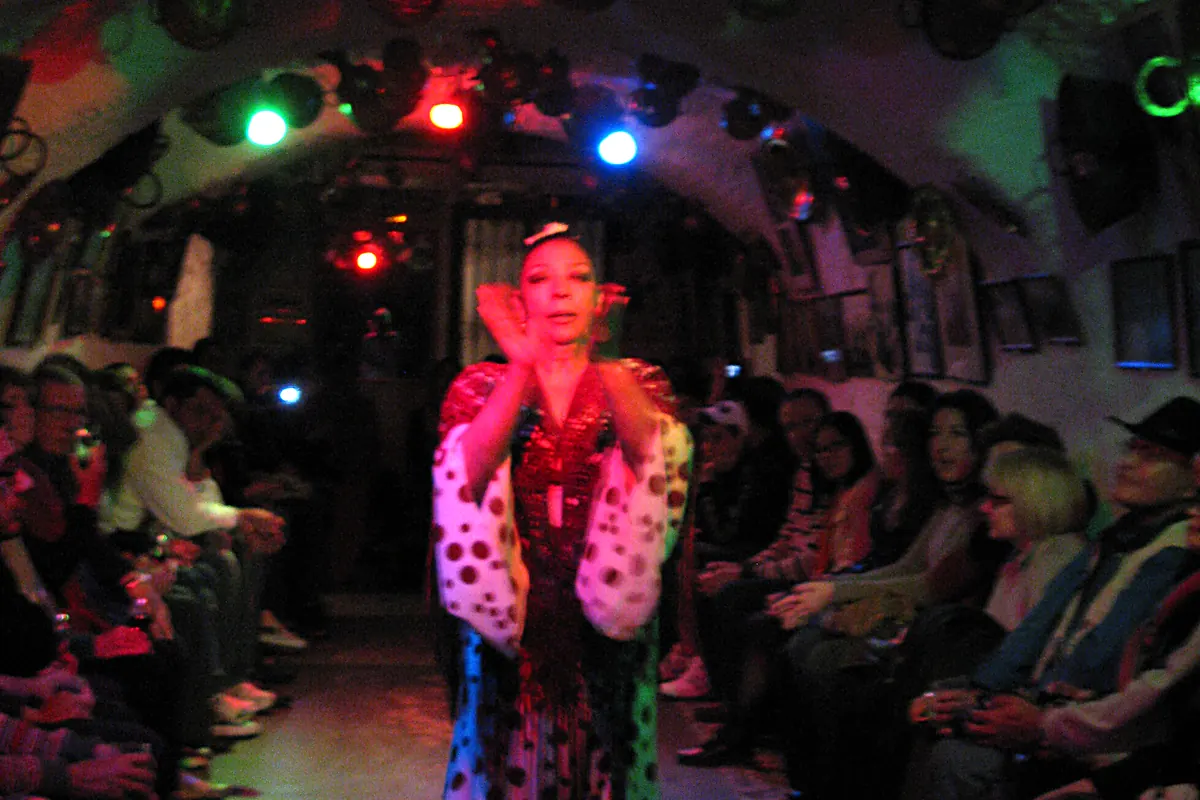
The cave is small, so the room sets the tone. Spectators sit close to the performers, and the cast works in the space between you. Watching quietly through the song and the footwork, and letting the performers shape the moments for calls and claps, is the safest rule for a first visit. The venue's own website describes its zambra as a festival where the artists interact with you, which tells you that the room may be asked to take part.
What jaleo is
Jaleo is the name Wikipedia gives to the clapping and shouted encouragement that urge performers on, and it counts jaleo as essential to flamenco. Typical shouts are olé and así se baila, which translates as that's how you dance. Palmas come in two colours: a muffled clap with cupped hands, and a crisp one with flat fingers on the palm. The article also lists finger-snaps, called pitos, and stamping a foot while seated.
Why the room claps
UNESCO places flamenco at church festivals, rituals and ceremonies as well as family celebrations, and notes that families, social circles and flamenco clubs hand it down. Clapping and calls come from gatherings where everyone present takes part. A zambra, which grew out of wedding festivities, keeps that spirit, so the idea of a room that responds is part of the form and is no invention for visitors.
When the room joins in
The jaleo belongs first to the performers, who clap and call to one another. Guests may add a quiet olé at a moment when the dancer has just landed a flourish, if the room is doing the same. A safe approach for a visitor is to leave the clapping to the performers until the room joins in, and to keep any calls short and quiet. The article stresses that jaleo takes serious training, a good reason to follow the performers' lead rather than keep time on your own.
You do not need Spanish
UNESCO says flamenco lyrics are characterised by brevity and simplicity. The Sacromonte Caves Museum adds that although flamenco is sung in Andalusian Spanish and learned by heart, it is understood in all languages. At a cave show the faces, the hands and the footwork carry much of what the words would. Watch the dancer's face and the singer's, and let the rhythm do the rest; you will follow more than you expect.
The closing rumba
The venue's website says the show ends with a rumba, a more informal dance in which all visitors are invited to join. If you want to join in, wait for the invitation, and follow the performers rather than the people next to you. If you would rather watch, nobody is owed a dance, and you can stay in your seat.
Phones, photographs and drinks
Follow the instructions of the venue's staff on photographs and filming, and if you are unsure, ask before you raise a phone. A drink is part of the ticket, but a glass is easy to knock over in a close room, so keep it at your feet or on your knee when the dancers are near. Keep your bag small, because space is tight, as some reviewers on the ticket page note.
Who this isn't for
If the idea of being invited to dance fills you with dread, know that the invitation is just that, and you may decline. But if you want a hushed recital where nobody interacts, a cave zambra is the wrong format, because the venue describes its show as a festival where the artists interact with you, and the show ends in a rumba.
Frequently asked questions
Can I clap along?
Jaleo, the clapping and calls, is part of flamenco, but it belongs first to the performers. Follow the room, and add a quiet olé only when the room does.
Do I have to dance in the rumba?
No. The venue's website says visitors are invited to join, which is an invitation, not an obligation.
Sources